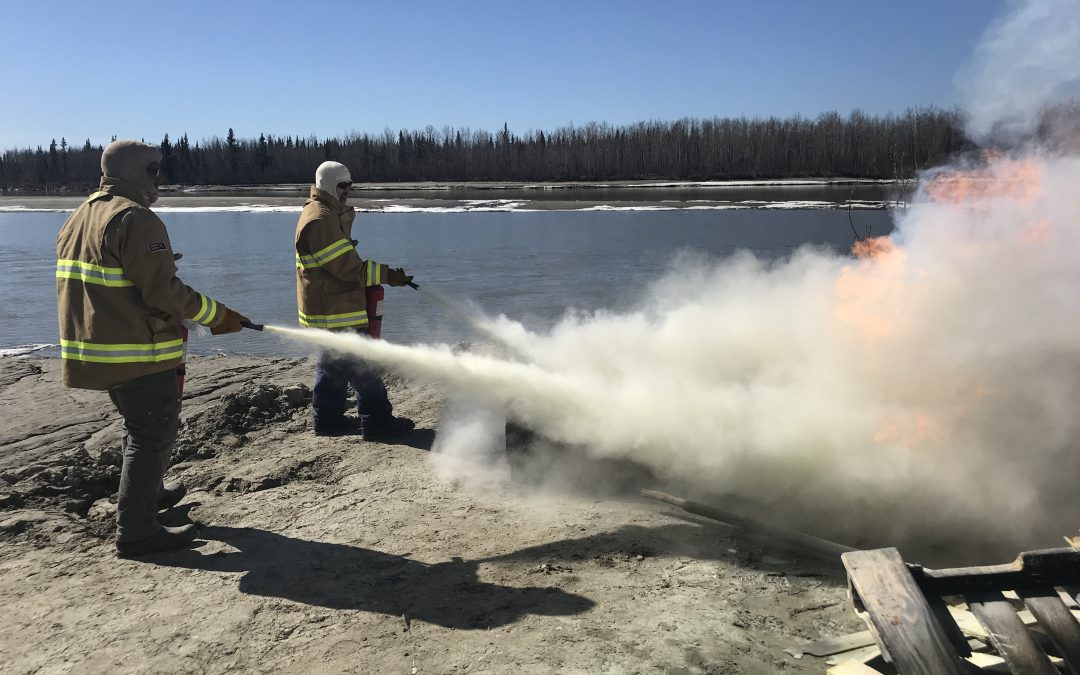
MITAGS recently traveled to Nenana, Alaska to conduct a two-day M-SAFE training program for Ruby Marine. Ruby operates two vessels on the Tanana and Yukon Rivers, delivering freight and fuel to villages spread out over a distance of nearly a thousand miles.
Because they operate in such remote areas, often far from any potential assistance, it is critical that Ruby’s crews know how to do their jobs safely and that they are prepared to respond effectively to any emergency that may arise.
Over the course of the two-day program, crew members reviewed safety procedures and participated in emergency drills aboard their two vessels. The highlight of the program was the afternoon of the second day, where they had the opportunity to fight large wood and oil fires using fire hoses and portable extinguishers.
M-Safe Training in Alaska – Video Footage
MITAGS takes pride in its ability to deliver high quality training programs wherever the need arises. Responding to the demand for Towing Vessel Safety training brought on by Subchapter M, we have now conducted a number of M-SAFE training courses around the country. To learn more, or to arrange a training session for your crew, contact Capt. Jon Kjaerulff via e-mail [email protected], or by phone at 206-255-8398.
Related Posts
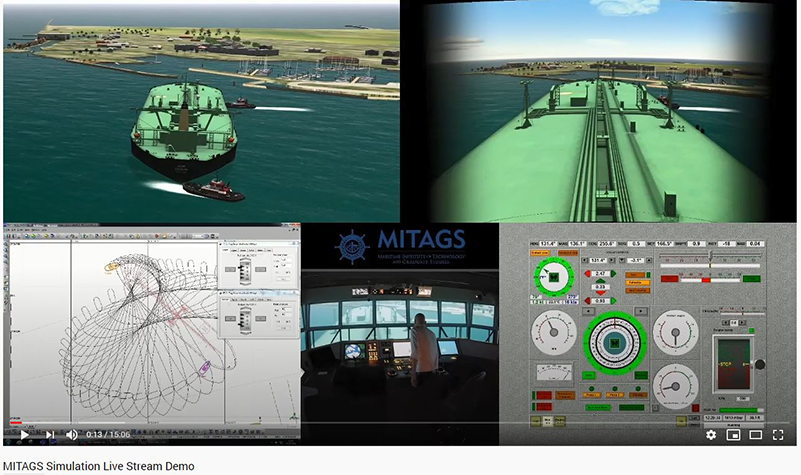
MITAGS now offers LIVE remote viewing of Operational Research simulation projects
MITAGS now offers Operational Research customers the ability to link in and view live stream feeds of their projects in action. Customers and principals who lack the time or ability to travel can now observe, comment and interact in real time with their colleagues and MITAGS staff on-site Baltimore or Seattle.
MITAGS 2021 CoE for Domestic Maritime Workforce Training/Ed
On May 19th, the U.S. Department of Transportation’s Maritime Administration (MARAD) announced the designation of 27 Centers of Excellence for Domestic Maritime Workforce Training and Education (CoE). The CoE designation recognizes community colleges and training institutions that prepare students for careers in our nation’s maritime industry. These academic institutions are located in sixteen states and one U.S. territory. MITAGS was one of six dedicated maritime training centers selected for this designation. Click the headline above to read the full story...

MITAGS recognized as a leader in research simulation
MITAGS’ simulation partner Wärtsila has posted an article on its web site describing the growing role of simulation in port development and ship design. The article highlights MITAGS’ role as not just a pioneer in the use of simulators, but an industry leader in application of new technologies and capabilities. It mentions one notable project […]